


Franchise Football: Pro GM
Fantasy Moguls, Inc.
I approached Franchise Football: Pro GM expecting a quick sports-management game, but its appeal is more specific than that. This is a franchise football experience built around the decisions that happen away from the field: shaping a roster, thinking about team direction, and trying to make choices that feel sensible over time. It will not satisfy someone looking for a traditional action football game with constant hands-on play. For me, its strongest quality is the way it turns football knowledge into a series of small management choices that are easy to revisit during a spare moment.
That focus also explains its limits. The game is best when I want to act as the person responsible for a team’s bigger picture, not when I want a full simulation with the depth of a desktop management title. After spending time with it, my view is straightforward: this is a good fit for football fans who enjoy planning more than controlling every snap, especially those who want a free starting point on a phone or tablet.
How the franchise-management approach works
The basic fantasy is clear from the first session. I am not simply selecting a team and watching a match unfold; I am trying to build a franchise that can make better decisions than its rivals. That changes how I look at each part of the game. A player move is not just a short-term improvement, and a disappointing result is not necessarily proof that the entire plan has failed. The interesting question is whether the choice supports the kind of team I am trying to create.
That makes the game more thoughtful than a standard pick-up-and-play football title. In an arcade-style alternative, my attention would normally go toward timing, controls, scoring chances, or learning a particular match mechanic. Here, I spend more time considering priorities. The reward comes from seeing a plan develop rather than from personally making the winning play.
I found that distinction useful when deciding how to play. If I had only a few minutes, I could make a couple of management decisions and leave. When I had more time, I could look at the wider state of the franchise and consider whether a short-term fix was worth the cost to future progress. That flexibility gives the game a natural mobile rhythm without making it feel like a disposable tap-based diversion.
Related News

Threads in Real Life: Who Should Join, Lurk, or Leave

How SHEIN Turned Shopping Into an Endless Content Feed

How to Make Fortnite Feel Smarter on Mobile

Should You Switch to Microsoft Outlook on Mobile?

Why Gallery Keeps Pulling Users Back

X Review: Why Its Network Still Matters
Why the decisions feel more personal than the store pitch suggests
The short store description presents a simple idea: franchise football. In practice, the more interesting part is the role-playing element. I began to form preferences about the type of team I wanted rather than treating every decision as an isolated optimization problem. Sometimes I wanted stability and a reliable foundation. At other times I was willing to accept uncertainty because a conservative approach felt too slow.
One useful habit is to decide on a broad identity before making too many changes. For example, I might prioritize a balanced roster instead of chasing one obvious improvement. That prevents me from reacting emotionally to every setback. It also makes later decisions easier because I have a standard against which to judge them. The game becomes more engaging when I treat the franchise as a project instead of a sequence of unrelated screens.
A second tip is to pause before spending resources simply because an option is available. Mobile management games often encourage immediate action, but the better choice is not always the most visible one. I had more satisfying sessions when I compared a tempting short-term upgrade with the value of keeping flexibility for a later problem. That kind of restraint is one of the game’s less obvious skills.
Gallery
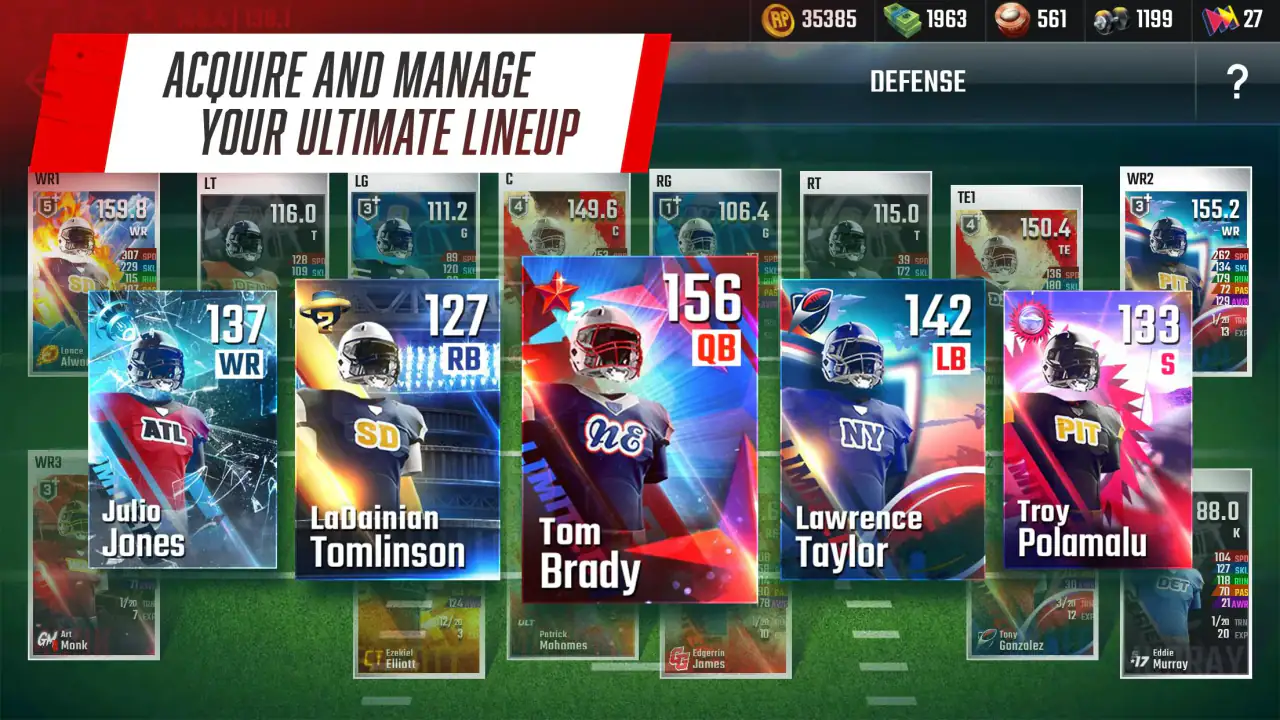
The third insight is that a losing stretch can be useful information. Rather than changing several parts of the team at once, I prefer to identify the decision that most likely caused the problem and adjust one area. This approach makes the results easier to understand. It also reduces the feeling that success depends on random button presses, even when the game does not provide the same level of explanation as a larger management simulation.
What makes it approachable on a phone
Franchise Football: Pro GM is free to start, which matters for a game built around gradual involvement. I could try its management style without first committing to a purchase. That makes it easier to recommend to a friend who enjoys football but is unsure whether a general-manager game will hold attention.
The age rating is Everyone, so the presentation is positioned for a broad audience rather than a niche group of experienced sports-simulation players. I would still separate accessibility from simplicity. The premise is easy to understand, but enjoying it requires patience with decisions that may not pay off immediately. A younger or completely new player may appreciate the clear franchise concept, while a long-time management fan may quickly start looking for more detailed control.
The Android release supports devices running version 7.0 or later. That gives the game a relatively broad technical reach, although the experience can still depend on the age and performance of an individual device. On a phone, I prefer using it in short, focused sessions rather than trying to turn it into an all-evening game. The format suits checking the team, making a decision, and returning later with a clearer head.
Fantasy Moguls, Inc. has kept the product active enough to reach version 7.13.11, and that is useful context for anyone deciding whether to try it now. I do not treat a version number as proof that every rough edge has disappeared, but it does suggest that this is not an abandoned experiment sitting unchanged on a device. The game has had time to establish its identity as a football franchise title.
Where the strongest evidence of quality appears
The clearest strength is the way the game encourages long-term thinking without requiring me to study a manual before beginning. I can understand the broad objective quickly, then discover my preferred approach through play. That balance is difficult to get right. A casual sports game can become shallow, while a serious management game can become intimidating. This one sits between those extremes.
I also like that the franchise framing gives ordinary choices a sense of consequence. Even when a decision is small, it belongs to a larger story about the team. That is more satisfying than completing disconnected challenges because I can remember why I made a particular move. The best sessions leave me thinking about what I should do next, not merely whether I have completed the current task.
The audience response supports that general impression. The game holds an average rating of 4.4 from around 8.8 thousand ratings, with roughly 2.4 thousand written reviews. Those figures do not replace personal testing, but they are consistent with my experience that the central concept works for a sizable group of players. It has also passed over 500 thousand installs, so finding other people interested in this style of football game should not be difficult.
Still, I would not interpret that popularity as a guarantee that every football fan will enjoy it. A strong rating can reflect satisfaction with the intended experience, while someone seeking a different kind of football may remain disappointed. The important point is to understand what the game is asking me to do before judging it.
A realistic everyday use case
Imagine that I have ten minutes before leaving for work or while waiting for an appointment. A conventional football game may feel awkward in that situation because a match can require uninterrupted attention and precise input. This title works better for me there. I can review the franchise, make a roster or strategy decision, and stop without feeling that I abandoned a full match halfway through.
That same scenario reveals an important trade-off. Short sessions are convenient, but they can also encourage impulsive decisions. If I am distracted, I may spend resources or alter the team without properly considering the consequences. My practical solution is to use brief sessions for reviewing information and reserve bigger changes for a time when I can concentrate. The game supports mobile play, but it still rewards deliberate thinking.
It can also work as a companion game for someone who follows real football. I enjoy comparing my fictional management instincts with the decisions I see from actual teams, even though the game should not be treated as a complete representation of professional front-office work. That comparison adds flavor, but it is my own way of extending the experience rather than a promise that the game recreates every real-world factor.
The weakness: depth has a ceiling
My main criticism is that the game’s accessible structure can eventually feel limited to players who want a very detailed simulation. I enjoy making franchise-level choices, but I do not get the same sense of control I would expect from a large management game designed for a computer. There is a ceiling to how much I can express through the available decisions, and experienced sports-management players may reach that ceiling sooner than casual fans.
This is not a flaw in the same way for everyone. For a newcomer, fewer layers can make the game welcoming. For me, however, the trade-off becomes noticeable after the initial discovery period. I sometimes want more explanation about why a result happened or more ways to shape a team’s identity. When that desire becomes stronger than the pleasure of making the next decision, I know it is time to play a deeper alternative instead.
The free-to-play structure also deserves careful attention. Optional purchases range from $0.99 to $79.99 per item. I would not recommend spending simply to solve a frustrating moment. Anyone who dislikes in-app purchases should approach the game cautiously and decide on a personal limit before getting invested. The free entry is valuable, but the presence of high-priced individual items means the financial side should be considered part of the experience.
My advice is to play without purchasing at first and observe whether the core management loop remains enjoyable on its own. If the game is only fun when progress is accelerated, that is a warning sign that it may not be the right match. On the other hand, a player who genuinely enjoys the franchise decisions may see optional spending as a convenience rather than a requirement. The right choice depends on how much patience the player has and what kind of progression feels satisfying.
Who should choose it, and who should skip it
I would recommend this game to football fans who like the general-manager perspective, enjoy planning, and prefer a title that can be checked in short sessions. It is especially suitable for someone who likes imagining how a team should be built but does not want to learn the dense systems found in a full-scale sports-management simulator.
It is also a reasonable first step for a player who has only tried football games focused on direct control. The game demonstrates that sports can be engaging even when I am not personally handling the ball. A friend who enjoys discussing transfers, lineups, team direction, or long-term rebuilding may find more here than in a purely arcade product.
I would skip it if my priority is realistic on-field action. This is not the choice I would make for responsive passing, defensive control, or the feeling of personally winning a match through skill. I would also look elsewhere if I wanted exhaustive statistical detail, complex tactical modeling, or a simulation that mirrors every responsibility of a professional front office.
Compared with a standard football game, this one trades immediate excitement for reflection. Compared with a heavyweight management simulator, it trades depth for accessibility and convenience. That middle position is both its identity and its limitation. The game is strongest when I want enough structure to make decisions meaningful, but not so much complexity that every session becomes homework.
How I would approach a first week
During the first few sessions, I would avoid trying to rebuild everything at once. I would learn how the franchise responds to ordinary decisions, note which areas seem most urgent, and make changes gradually. This creates a clearer connection between action and result. It also protects the early experience from becoming a confusing collection of untested choices.
I would keep a simple mental record of the decisions that define the team. Am I trying to improve immediately, or am I building toward something more stable? Do I value flexibility, or am I comfortable committing resources to a specific direction? These questions make the game more interesting because they turn progress into a personal strategy rather than a hunt for one universally correct move.
I would also treat in-app purchases as optional from the beginning. The price range makes it sensible to establish boundaries before the game becomes part of a daily routine. If I can enjoy the franchise while spending nothing, I have found the right relationship with it. If not, I would rather stop than let urgency dictate my decisions.
Finally, I would compare my expectations with the game’s actual scale. It is a mobile sports-management game from Fantasy Moguls, Inc., not a replacement for every other football title. Keeping that distinction in mind makes its strengths easier to appreciate and its missing depth less frustrating.
My final recommendation
Franchise Football: Pro GM succeeds because it understands that football fandom is not limited to what happens during a play. I enjoy the feeling of guiding a team, weighing immediate improvements against longer plans, and returning to see whether my choices have created a better franchise. The game is approachable, free to begin, and broad enough to appeal beyond dedicated simulation experts.
Its limitations are equally clear. The management layer may feel too light for players who want a deep, highly detailed front-office simulator, and the in-app purchase range means cautious spending habits are important. It also cannot replace an action-focused football game for anyone who wants direct control on the field.
For me, the verdict is positive with a specific condition: choose it for the decisions behind football, not the action of playing football itself. If that sounds like the part of the sport I would enjoy most, I would install it and give the free experience a fair trial. If I wanted every tactical detail or a full match-day challenge, I would choose a different game instead. As a compact franchise builder, though, it offers a satisfying way to think like a team manager whenever I have a few minutes to spare.
FAQs for Franchise Football: Pro GM
What is Franchise Football: Pro GM?
Franchise Football: Pro GM is a football management simulation in which you take control of a professional team and make the decisions normally handled by a general manager. You are responsible for building the roster, signing or trading players, managing contracts, setting team priorities, and guiding the franchise through multiple seasons. It focuses more on strategy and management than on directly controlling players during matches.
How does gameplay work in Franchise Football: Pro GM?
The game is primarily driven by front-office decisions rather than real-time action. You review player abilities, compare contracts, plan your depth chart, develop talent, and make choices that affect your team’s performance over a season. Games are simulated after your preparations, so success depends on creating a balanced roster and adapting your strategy instead of relying on manual controls or arcade-style gameplay.
Is Franchise Football: Pro GM free to download and play?
Franchise Football: Pro GM can generally be downloaded without an upfront purchase, but availability, advertisements, and optional in-app purchases may depend on the version and platform. Before installing, it is worth checking the current store listing for pricing details, supported devices, and purchase information. Players who prefer a completely unrestricted experience should review these conditions carefully before committing significant time to a franchise.
Does the game require an internet connection?
The exact connection requirements can vary according to the current release and the device on which you play. Many management features may work offline after installation, but online access can still be needed for updates, cloud-related functions, advertising, purchases, or content verification. If you expect to play while traveling or without reliable data, test the game in offline mode first rather than assuming every feature will remain available.
Is Franchise Football: Pro GM suitable for casual players?
It can be suitable for casual players who enjoy planning, statistics, roster building, and long-term progression, although it may feel more detailed than a typical pick-up-and-play football game. The experience rewards patience because decisions often influence several matches or seasons instead of producing immediate results. Players looking for direct action, quick matches, or realistic on-field controls may find the management-focused format less engaging.
Pros
- Deep roster management with trades
- contracts
- scouting
- and player development.
- Matches are quick to simulate
- making it easy to manage a season in short sessions.
- Multiple strategic decisions give team-building a satisfying long-term focus.
- Clear statistics help compare players and evaluate your lineup effectively.
- Offline-friendly gameplay suits users who want a management game without constant action.
Cons
- The interface can feel dense until you learn where each management option is located.
- Progress may become repetitive once your team reaches a consistently strong level.
- Limited visual match presentation may disappoint players seeking an action-focused football game.
- Some advanced features and progression options may depend on in-app purchases.
- New players may need time to understand the financial and roster management systems.


